RAYARRAY
is a node-based generative light installation that reflects collective behavior and explores the emerging systems.

is a node-based generative light installation that reflects collective behavior and explores the emerging systems.
/////////////////////////
Year of production: 2022-2023
50 Nodes made of a custom PCB in a 3D printed bracket on which the motor controller and an ESP8266 micro-controller are located. The four connectors are 1/4“ jack sockets. A node can carry a mirror or a laser.
100 Jumpers made of 35mm alimunium tube with 1/4“ jacks on the ends. The Jumpers form the static framework as well as the power supply for the nodes.
The ESPs receive signals via WIFI from a processing application and use the data to operate the motors.
Made in collaboration with Lucca Vitters
/////////////////////////
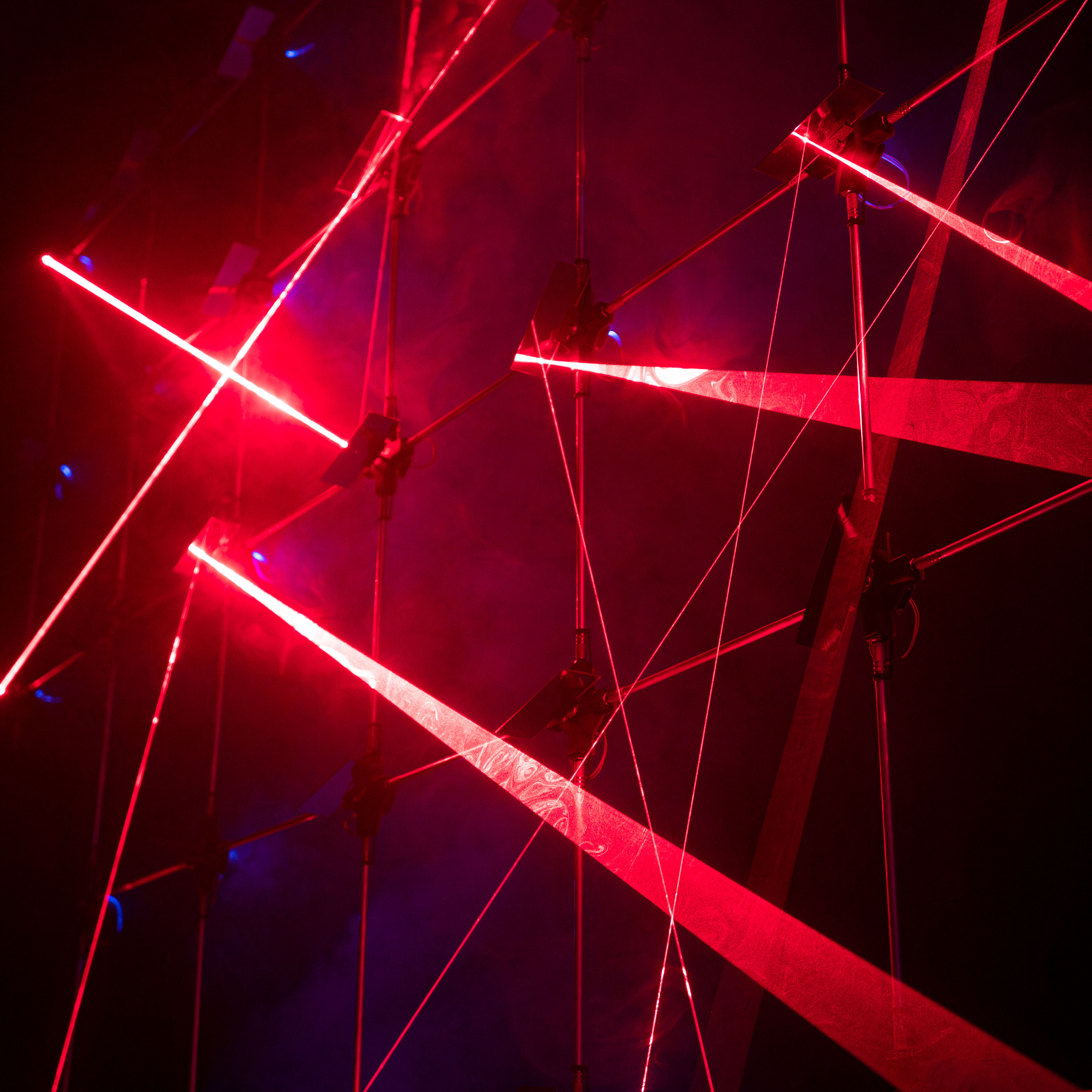
The laser beams entering the grid are reflected by a multitude of mirrors, forming a complex pattern. The rotation of the mirrors creates a continuously changing light sculpture, sometimes chaotic, sometimes organized. The name RAYARRAY is composed of the two terms RAY and ARRAY. "Ray" is in this case a laser beam, while "array" comes from informatics and describes an arrangement or a field. RAYARRAY means as much as "A field of rays." and is a reflection on collective behavior, since the individual nodes act autonomously from each other but are visibly connected by the entering laser beams and the resulting reflections.
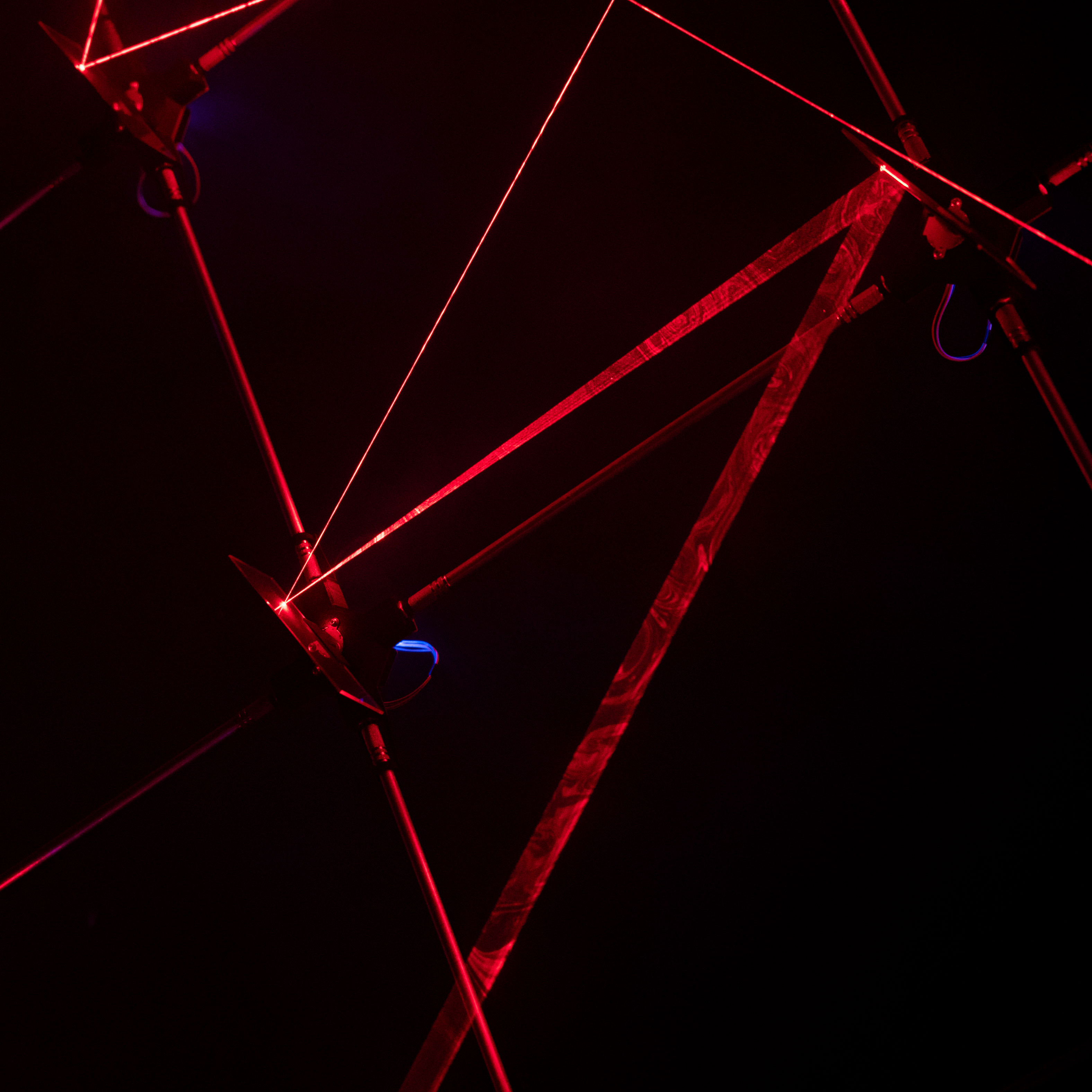
The light as a source of information is constantly reflected from node to node and generates the perceivable system. A field of possibilities that emerges from the obscurity. The longer the observation of the light, the more distinctive and at the same time reoccurring patterns appear. RAYARRAY demonstrates that an organized structure can emerge from collective chaos. RAYARRAY as a closed system represents a room that breaks the illusion of our reality, because it creates a new room using the laser beams, another room apart from the absolute existing one.
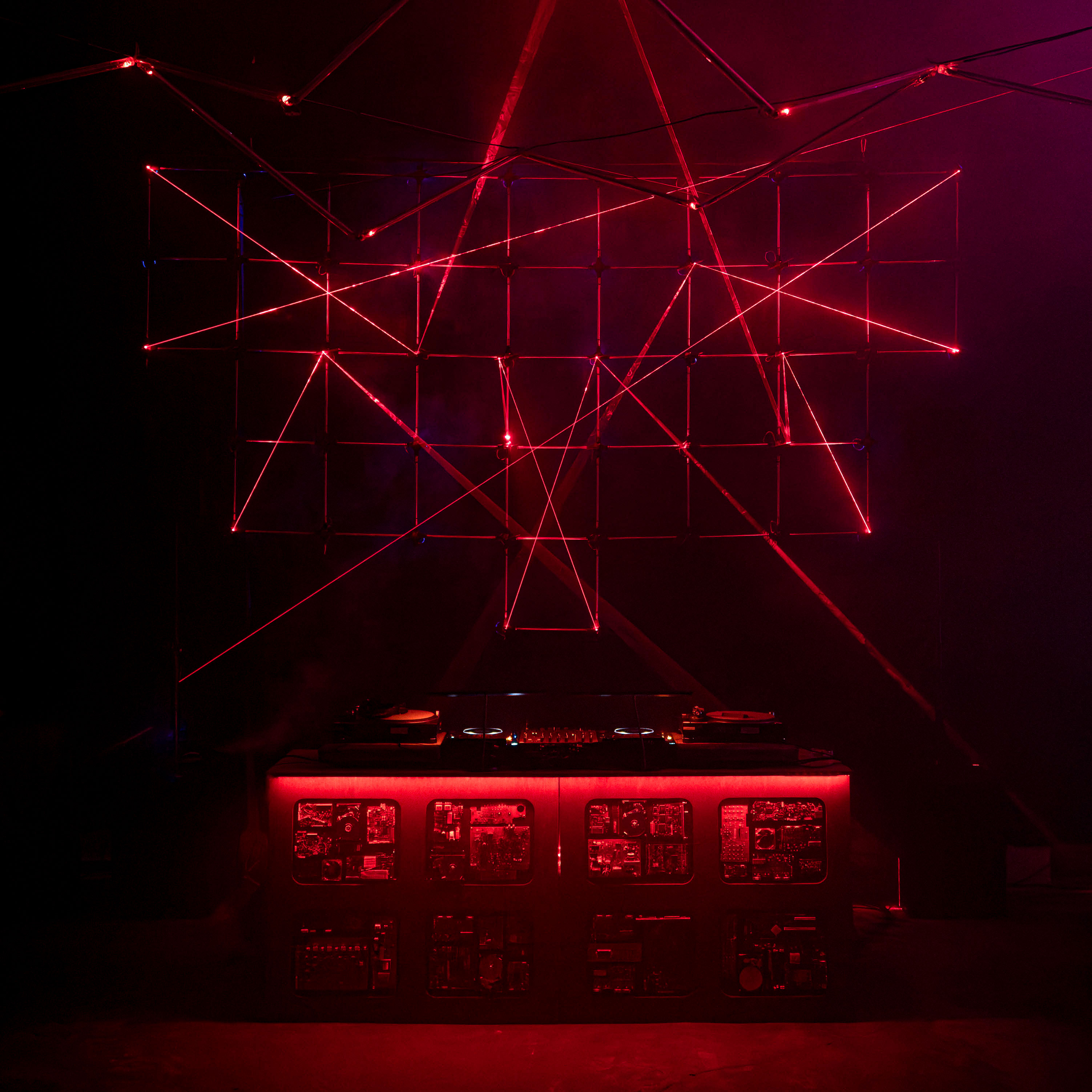
RAYARRAY was developed during my bachelor thesis on the subject RAVE A detailed reflection on the installation can be found in this context.
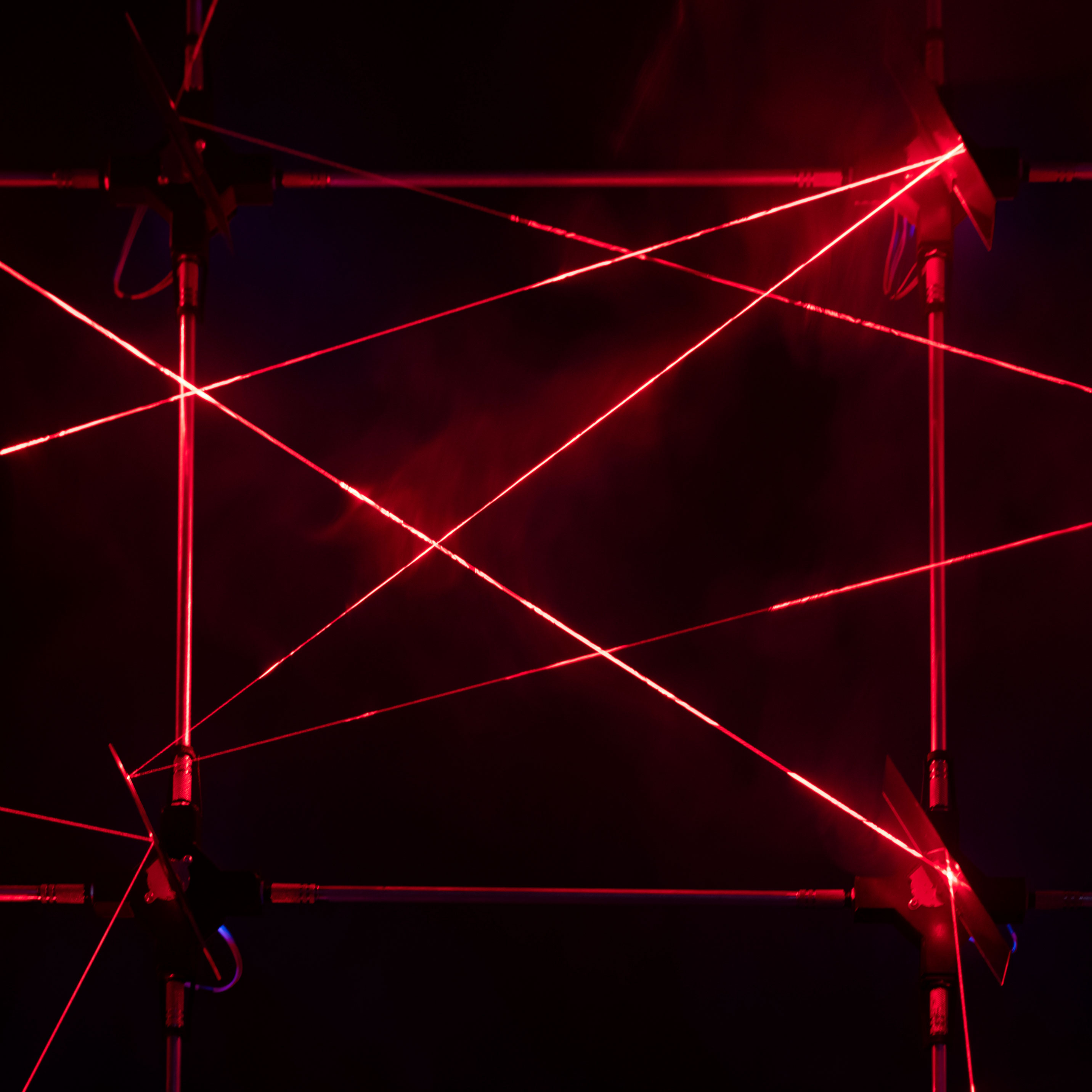
Photos by Benjamin Schlemmer